


GLOSSOPHOBIA
- May 18, 2018
- 3 min read

A phobia is a type of anxiety disorder that causes an individual to experience extreme, irrational fear about a situation, living creature, place, or object.
Fear of Public Speaking Phobia – Glossophobia
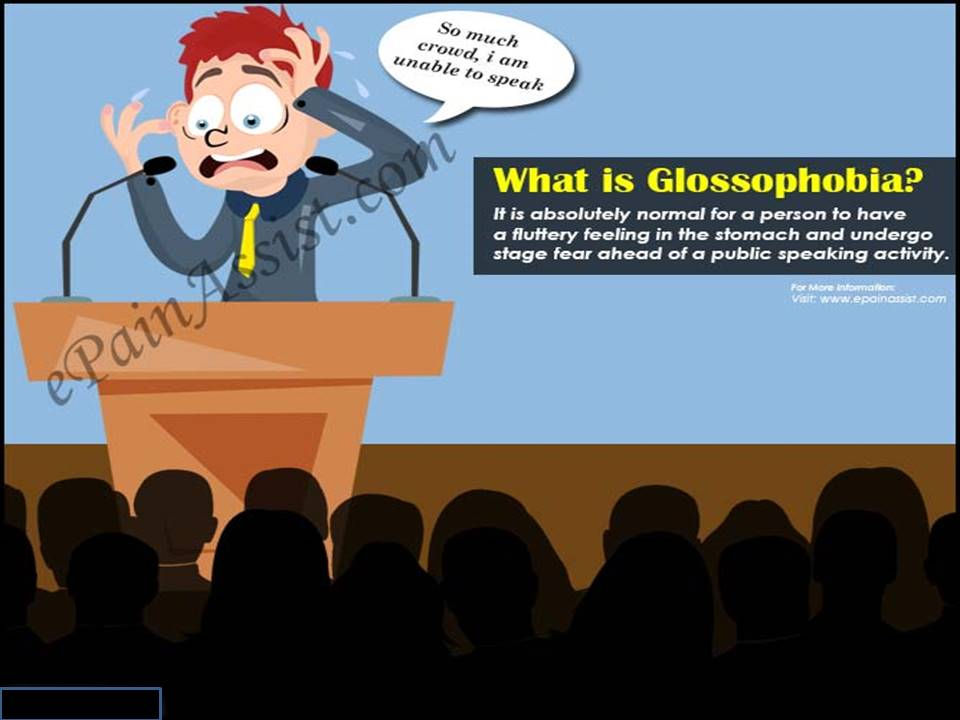
The fear of public speaking or stage fright is also termed as Glossophobia. Many people experience some degree of stage anxiety before speaking/performing at events.
In case of extreme Glossophobia however, individuals simply freeze before their audience. They might be unable to speak. They might find that their mouth dries up or they start sweating, shaking or experiencing palpitations.
Symptoms of the fear of public speaking:
Common signs and symptoms of the fear of public speaking include anxiety or nervousness before the event that involves speaking or performing before a small/large group of people. Physical symptoms of glossophobia include:
Panic attacks characterized by sweating or trembling
Dry mouth
Nausea and vomiting in the extreme cases
Stiffness in the neck and back muscles
Tense and weak or quivering voice
Causes of Glossophobia:
The exact cause of glossophobia is unknown but it is likely that certain traumatic events in one’s past as a child or even as an adult might have led to this fear of public speaking. Often the individual coping with this phobia might avoid speaking in public for so long that what beings as normal anxiety might turn into full blown Glossophobia.

In the United States, approximately 19 million people have phobias.
Approximately 75 % of world population is suffering from a Fear of giving public speech.
As of now glossophobia is classified under the category of social phobia.
Social phobia can be extremely debilitating and can make it very difficult to engage in everyday activities such as:
talking in groups or starting conversations
public speaking
speaking on the phone
meeting new people
How is glossophobia treated?
If your fear of public speaking is severe or interfering with your everyday life, consult your doctor. They can work with you to develop a targeted treatment plan. Options for treatment plans include:
Psychotherapy:
Many people are able to overcome their glossophobia with cognitive behavioral therapy. Working with a therapist can help you identify the root cause of your anxiety. For example, you may discover that you fear ridicule, rather than speaking, because you were mocked as a child.
Together, you and your therapist will explore your fears and the negative thoughts that go with them. Your therapist can teach you ways to reshape any negative thoughts.
Examples of this might include:
Instead of thinking “I can’t make any mistakes,” accept that all people make mistakes or have omissions when presenting. It’s okay. Most of the time the audience isn’t aware of them.
Instead of “Everyone will think I’m incompetent,” focus on the fact that the audience wants you to succeed. Then remind yourself that your prepared material is great and that you know it well.
Once you’ve identified your fears, practice presenting to small, supportive groups. As your confidence grows, built up to larger audiences.
Other strategies for overcoming glossophobia:
For example, you might find it beneficial to take a public speaking class or workshop. An organisation that trains public speaking skills.
In preparation:
Know your material. This doesn’t mean you should memorize your presentation, but you should know what you want to say and have an outline of the key points. Give special focus to the introduction, because this is when you are likely to be most nervous.
Script your presentation. And rehearse it until you have it down cold. Then throw away the script.
Practice often. You should continue practicing until you’re comfortable with what you’re going to say. Then practice more. Your confidence will increase as you realize that you know what you’re going to say.
Videotape your presentation. You can note if changes are needed. And you may be pleasantly surprised at how authoritative you look and sound.
Work audience questions into your routine. Jot down a list of questions you might be asked and be prepared to answer them. When appropriate, plan to involve the audience in your presentation by asking questions.
Just before your presentation:
If possible, practice your material one last time before heading out to give your presentation. You should also avoid food or caffeine before speaking.
During your presentation:
Keep in mind that 40 percent of the audience fears public speaking, too. There’s no need to apologize for being nervous. Instead, do your best to accept that stress is normal and use it to be more alert and energetic.
Learn as much as you can about your topic
Find out who your audience will be
Prepare a presentation
Don't memorize your speech
Practice
Anticipate questions your audience may ask
Dress well, but comfortably
Stop telling everyone how nervous you are
Keep a glass of water next to you
Find some friendly faces in the audience
Speak slowly
most important one Use visual aids
Comments